Jan 29, 2010

Nature Journaling Birds

We've been observing birds since December when I received a bird feeder for my birthday. My binoculars and field guide have been our best friends in our quest to identify the birds coming to our backyard.

I was brave and attempted to draw a little Junco in my nature journal, but

the kids are a little intimated by drawing birds, so I found this great coloring book of birds and printed off some of the birds that we are seeing for the kids to color, cut out, and paste in their nature journals.


Snickers likes to observe the birds too, but for a very different reason I think! Good thing for the birds that she's an indoor cat!

Jan 26, 2010

The Trick May Be Water

We read somewhere recently that birds have a hard time finding water in the winter. They can eat snow if they have to, but people can help the birds by putting out a little water for them. Clean feathers keep birds warmer than dirty feathers, so they need water to bathe in as well as to drink. This morning, Grant and I put out a container of water. In less than 2 minutes, we had around 7 or 8 robins fighting over the water! Until this morning, we had not been able to attract the robins to our backyard. Water did the trick! If you are trying to attract more birds to your yard, try putting out a little water. The birds will thank you!

Jan 21, 2010

Winter/Snow Reading


We are enjoying a few "snow" books this winter season. Chloe's favorite so far is Blizzard by Betty Ren Wright. Grant is using The Story of Snow to write a report about how snow crystals are formed. My favorite book is Snowflake Bentley. Mr. Bentley spent his life photographing snowflakes and gave scientists much of the knowledge they have today on the subject of snow. We keep hoping for some snow here in ABQ, so that we can try our hand at taking some pictures of snow crystals like we found here. Check them out. They are awesome!

Jan 14, 2010

The Birds are Lovin' It

We wondered when we put up the new feeder if the birds would like the food it had to offer.

I think they like it!

Jan 8, 2010

Bird Watching

Now that our holiday break is over, we are ready to resume our study of nature. We have some dark paper in our freezer all ready for catching and observing snowflakes, but wouldn't you know it---no snow in the foreseeable forecast. So, we are turning our attention to birds!

Allison got a great picture of a pelican on Galveston Island right after Christmas.

I got a great birdfeeder for my birthday, and we've been watching birds with the binoculars I received for Christmas. I decided to try and keep track of the ones we see by listing them on our calendar when we spot a new bird.

One of my favorite birds to visit us so far is the spotted towhee.

We also have lots of dark eyed juncos.

We're beginning to see some little house finches with their bright red heads and chests, but getting good pictures is a challenge!

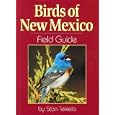
Product Details
I really like this field guide because the birds are grouped by color, so we can easily look up and find a bird we have just spotted in our backyard.

What birds are visiting your feeder this winter?

Dec 13, 2009

Making Snowflake Crystals

In our study of snow, we learned that snowflakes are formed from snow crystals. As the crystals fall from the sky, they clump together to form snowflakes. The kids and I did an experiment to see how crystals form. First, I had the kids make "snowflakes" from white pipe cleaners.

Any shape will do, really.

Next, we floated our snowflakes in a solution of Borax and boiling water by attaching them to a ruler laid over a large Tupperware bowl. For every 2 cups of boiling water, dissolve 1/4 cup of Borax. Add more Borax until a slight amount has not dissolved in the water.

Allow your snowflakes to grow crystals overnight or longer.
It took our solution about 24 hours to start hardening into some really sparkly crystals.

Dec 10, 2009

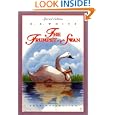
The Trumpet of the Swan

Product DetailsThe Trumpet of the Swan by E.B. White is one of my all time favorite books. I read it to the girls when they were elementary school age and Grant was about four. Chloe was too little to enjoy it. I decided we needed to read it again, and I'm so glad I did! White's fictional story about a boy named Sam Beaver who lives in Montana has already taught us quite a bit about trumpeter swans. Sam watches quietly while a cob and his mate hatch their eggs on a pond in Canada. Sam befriends the swan family and notices that the littlest male cygnet, named Louis, cannot say "Ko-hoh!" for the cygnet is mute. Louis later finds Sam in Montana and goes to school with him. Since nature has not given Louis a voice, he wants to learn to read and write in order to communicate. White has done an excellent job of blending a wonderful fiction story with facts about trumpeter swans living on Red Rocks Lake in Montana.


Facts About Trumpeter Swans

1. Trumpeter swans get their name from their trumpet-like call.
2. The mute male swan is typically found in city parks and is native to Eurasia.
3. Males are cobs. Females are pens. Babies are cygnets.
4. Cygnets are born gray in color and by the time they are one year old, they are pure white with black feet and black bill.
5. Male trumpeter swans can weigh anywhere from 21 to 32 pounds.
6. Trumpeter swans can be found in Yellow Stone National Park.