


Jan 21, 2010
Winter/Snow Reading
We are enjoying a few "snow" books this winter season. Chloe's favorite so far is Blizzard by Betty Ren Wright. Grant is using The Story of Snow to write a report about how snow crystals are formed. My favorite book is Snowflake Bentley. Mr. Bentley spent his life photographing snowflakes and gave scientists much of the knowledge they have today on the subject of snow. We keep hoping for some snow here in ABQ, so that we can try our hand at taking some pictures of snow crystals like we found here. Check them out. They are awesome!

Jan 14, 2010
The Birds are Lovin' It
We wondered when we put up the new feeder if the birds would like the food it had to offer.

I think they like it!

Jan 8, 2010
Bird Watching
Now that our holiday break is over, we are ready to resume our study of nature. We have some dark paper in our freezer all ready for catching and observing snowflakes, but wouldn't you know it---no snow in the foreseeable forecast. So, we are turning our attention to birds!

Allison got a great picture of a pelican on Galveston Island right after Christmas.

I got a great birdfeeder for my birthday, and we've been watching birds with the binoculars I received for Christmas. I decided to try and keep track of the ones we see by listing them on our calendar when we spot a new bird.


I got a great birdfeeder for my birthday, and we've been watching birds with the binoculars I received for Christmas. I decided to try and keep track of the ones we see by listing them on our calendar when we spot a new bird.


We also have lots of dark eyed juncos.

We're beginning to see some little house finches with their bright red heads and chests, but getting good pictures is a challenge!
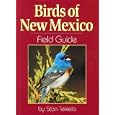
I really like this field guide because the birds are grouped by color, so we can easily look up and find a bird we have just spotted in our backyard.
What birds are visiting your feeder this winter?
What birds are visiting your feeder this winter?
Dec 13, 2009
Making Snowflake Crystals
In our study of snow, we learned that snowflakes are formed from snow crystals. As the crystals fall from the sky, they clump together to form snowflakes. The kids and I did an experiment to see how crystals form. First, I had the kids make "snowflakes" from white pipe cleaners.

Any shape will do, really.

Next, we floated our snowflakes in a solution of Borax and boiling water by attaching them to a ruler laid over a large Tupperware bowl. For every 2 cups of boiling water, dissolve 1/4 cup of Borax. Add more Borax until a slight amount has not dissolved in the water.

Allow your snowflakes to grow crystals overnight or longer.
 It took our solution about 24 hours to start hardening into some really sparkly crystals.

Dec 10, 2009
The Trumpet of the Swan
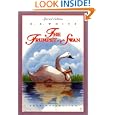 The Trumpet of the Swan by E.B. White is one of my all time favorite books. I read it to the girls when they were elementary school age and Grant was about four. Chloe was too little to enjoy it. I decided we needed to read it again, and I'm so glad I did! White's fictional story about a boy named Sam Beaver who lives in Montana has already taught us quite a bit about trumpeter swans. Sam watches quietly while a cob and his mate hatch their eggs on a pond in Canada. Sam befriends the swan family and notices that the littlest male cygnet, named Louis, cannot say "Ko-hoh!" for the cygnet is mute. Louis later finds Sam in Montana and goes to school with him. Since nature has not given Louis a voice, he wants to learn to read and write in order to communicate. White has done an excellent job of blending a wonderful fiction story with facts about trumpeter swans living on Red Rocks Lake in Montana.


Facts About Trumpeter Swans
1. Trumpeter swans get their name from their trumpet-like call.
2. The mute male swan is typically found in city parks and is native to Eurasia.
3. Males are cobs. Females are pens. Babies are cygnets.
4. Cygnets are born gray in color and by the time they are one year old, they are pure white with black feet and black bill.
5. Male trumpeter swans can weigh anywhere from 21 to 32 pounds.
6. Trumpeter swans can be found in Yellow Stone National Park.
Dec 4, 2009
Winter Nature Notebook Entry
Yesterday's snow and the coming of Christmas made us all realize that winter had arrived. We took our nature walk yesterday afternoon after the snow clouds began to break up to see what the weather had left behind . Today, we worked in our nature journals to record our walk, and Grant and Chloe were inspired to try a little experimentation with the freezing point.
After learning the freezing point is 32 degrees, and knowing that yesterday's temps were below that, Grant and Chloe decided to see if water would freeze in a little cup when placed outside.
After learning the freezing point is 32 degrees, and knowing that yesterday's temps were below that, Grant and Chloe decided to see if water would freeze in a little cup when placed outside.

They were rewarded with solid blocks of ice this morning!

After reading in the Handbook of Nature Study about snowflakes, we learned a few fascinating facts about snow. Most people know that no two snowflakes are alike, but did you know that all snowflakes have 6 points and 60 degree angles? Isn't God's creation amazing?!
This is Chloe's dictation to me about snowflakes.

I found a great art project that allowed the kids to create in their nature notebooks a scene much like the one we had out our window yesterday during the morning's snowfall. You can find that project at Art Projects for Kids. I love it when I can combine art and nature study!

The kids drew with oil pastels in their nature notebooks and then sprinkled watered down white tempera paint over the finished drawing. I thought the effect was snowy and beautiful!


Dec 3, 2009
Cold Day Nature Walk
Psalm 147:16 He gives snow like wool; He scatters the frost like ashes;
Cold weather makes me feel like a hibernating bear. I want to sit on the couch wrapped up in blankets reading a good book while sipping a hot drink. But kids need to be outside. My kids need to be outside, and I know that we all have better attitudes after a little time outdoors. Even though the temperatures haven't gotten above 34 degrees today in ABQ, and light flurries of snow fell softly all morning long, I decided that this afternoon, a nature walk was in order. I figured we'd find more interesting things to study today than tomorrow when the sun comes out and melts the ice and snow. We bundled up warmly and braved the cold.
A break in the snow clouds over the mountains gave us courage.

The kids decided to make their own tracks in the snow.

Wow! We discovered icicles on the roof of our house.

We thought snow on a desert cactus was a funny sight.

As we walked around our front yard checking out signs of winter, Chloe remarked, "I guess all the bees are gone now." I said, "Yes, where do you think they went?" She replied very matter of factly, "South".
Subscribe to:
Posts (Atom)


